What is the cooling method of a household appliance brushless motor?
As a seasoned supplier in the realm of household appliance brushless motors, I’ve witnessed firsthand the critical role that efficient cooling methods play in the performance and longevity of these motors. In this blog post, I will delve into the various cooling methods employed for household appliance brushless motors, shedding light on their mechanisms, advantages, and applications. Household Appliance Brushless Motor
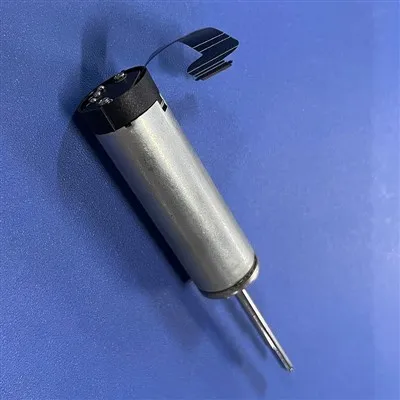
Introduction to Brushless Motors in Household Appliances
Brushless motors have become the go – to choice for many household appliances due to their numerous benefits. They offer higher efficiency, longer lifespan, and quieter operation compared to their brushed counterparts. These motors are commonly found in appliances such as refrigerators, air conditioners, washing machines, and vacuum cleaners. However, like all electrical devices, brushless motors generate heat during operation. If this heat is not dissipated effectively, it can lead to a decrease in performance, increased wear and tear, and even motor failure.
The Importance of Cooling in Brushless Motors
When a brushless motor runs, electrical energy is converted into mechanical energy. During this process, a portion of the energy is lost as heat due to electrical resistance in the windings, magnetic losses in the core, and friction in the bearings. Excessive heat can cause the motor’s insulation to degrade, reduce the magnetic properties of the rotor, and increase the resistance of the windings. All these factors can lead to a reduction in motor efficiency, torque output, and overall reliability. Therefore, implementing an effective cooling method is essential to maintain the motor’s performance and extend its service life.
Common Cooling Methods for Household Appliance Brushless Motors
Natural Convection Cooling
Natural convection cooling is one of the simplest and most cost – effective cooling methods. It relies on the natural movement of air caused by the temperature difference between the motor and the surrounding environment. As the motor heats up, the air around it warms, becomes less dense, and rises. Cooler air then rushes in to replace it, creating a natural airflow over the motor’s surface.
The main advantage of natural convection cooling is its simplicity and lack of additional components, which means lower cost and higher reliability. It is suitable for low – power household appliance brushless motors that generate relatively little heat, such as those used in small fans or some low – speed ventilation systems.
However, the cooling capacity of natural convection is limited. It is not sufficient for high – power motors or motors that operate continuously under heavy loads. The cooling rate is also highly dependent on the ambient temperature and the motor’s surface area available for heat transfer.
Forced Air Cooling
Forced air cooling involves using a fan to blow air over the motor to enhance the heat transfer process. The fan can be either an integral part of the motor or an external component. When the fan blows air over the motor, it increases the airflow rate, which in turn increases the convective heat transfer coefficient.
There are two main types of forced air cooling systems: internal fans and external fans. Internal fans are usually mounted on the motor shaft and rotate with the motor. They are compact and can provide localized cooling to the motor’s internal components. External fans, on the other hand, are placed outside the motor and can be adjusted to direct air flow more precisely over the motor’s critical areas.
Forced air cooling is more effective than natural convection cooling, allowing motors to handle higher power levels and more demanding operating conditions. It is commonly used in household appliances such as air conditioners, where the brushless motors need to operate continuously at high power.
One drawback of forced air cooling is that the fan itself consumes some power, which reduces the overall system efficiency slightly. Additionally, the fan can generate noise, which may be a concern in some quiet household environments.
Liquid Cooling
Liquid cooling is a more advanced and efficient cooling method. It involves circulating a liquid coolant, such as water or a water – glycol mixture, through channels or jackets around the motor. The coolant absorbs the heat from the motor and then transfers it to a heat exchanger, where it is dissipated to the surrounding environment.
Liquid cooling offers several advantages. It has a much higher heat transfer capacity compared to air – based cooling methods. This means that it can effectively cool high – power motors even under extreme operating conditions. It also provides more uniform cooling, which helps to reduce thermal stress on the motor components and improve their reliability.
In household appliances, liquid cooling is often used in high – end refrigeration systems and some high – performance kitchen appliances. However, liquid – cooling systems are more complex and expensive to implement. They require additional components such as pumps, hoses, and heat exchangers, and there is a risk of coolant leakage, which can damage the motor and the surrounding environment.
Factors Affecting the Choice of Cooling Method
When choosing a cooling method for a household appliance brushless motor, several factors need to be considered:
Power Rating
The power rating of the motor is a crucial factor. Higher – power motors generate more heat and therefore require more efficient cooling methods. For low – power motors, natural convection or a simple forced air cooling system may be sufficient, while high – power motors may need liquid cooling.
Operating Conditions
The operating conditions of the appliance also play a role. Motors that operate continuously, such as those in refrigerators or air conditioners, need more robust cooling solutions. In contrast, motors that operate intermittently may be able to get by with less effective cooling methods.
Cost
Cost is always an important consideration in household appliances. Natural convection cooling is the cheapest option, while liquid cooling is the most expensive due to the additional components required. Manufacturers need to balance the cost of the cooling system with the performance requirements of the motor.
Space Constraints
The available space in the appliance can limit the choice of cooling method. For example, some small appliances may not have enough space for a large fan or a complex liquid – cooling system, so natural convection or a compact forced air cooling system may be the only viable options.
Conclusion
In conclusion, the cooling method of a household appliance brushless motor is a critical aspect that directly impacts its performance, reliability, and lifespan. Natural convection cooling is simple and cost – effective but has limited cooling capacity. Forced air cooling is more efficient and suitable for a wide range of applications, although it consumes some power and can generate noise. Liquid cooling offers the highest cooling performance but is more complex and expensive.

As a supplier of household appliance brushless motors, I understand the importance of selecting the right cooling method for each application. We work closely with our customers to understand their specific requirements, taking into account factors such as power rating, operating conditions, cost, and space constraints. By providing high – quality motors with appropriate cooling solutions, we ensure that our customers’ appliances operate efficiently and reliably.
Robot Brushless Motor If you are in the market for household appliance brushless motors and are looking for a reliable supplier who can offer customized cooling solutions, I encourage you to reach out to us. We are ready to discuss your needs and provide you with the best possible products and services.
References
- Chapman, S. J. (2012). Electric Machinery Fundamentals. McGraw – Hill.
- Krause, P. C., Wasynczuk, O., & Sudhoff, S. D. (2013). Analysis of Electric Machinery and Drive Systems. Wiley.
Shenzhen HengDrive Technologies Co., Ltd.
Shenzhen HengDrive Technologies Co., Ltd. is one of the most professional household appliance brushless motor manufacturers and suppliers in China, specialized in providing high quality customized service. We warmly welcome you to buy the newest household appliance brushless motor in stock here from our factory.
Address: Building A & F, FuNing Hi-Tech Park, XinTian Road, FuHai Street, BaoAn District, ShenZhen, GuangDong Province, China.
E-mail: Marketing001@hengdrive.com
WebSite: https://www.hengdrivemotor.com/
