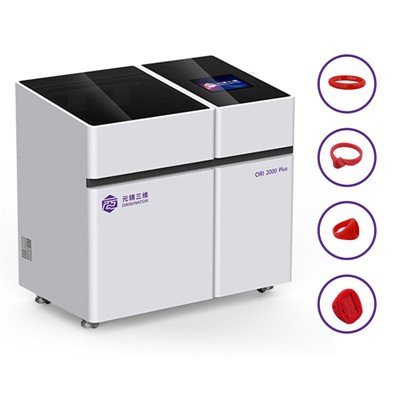
When it comes to jewelry 3D printing, one crucial factor that significantly impacts the final outcome is the layer height. As a jewelry 3D printer supplier, I’ve encountered numerous inquiries about the recommended layer height for this specific application. In this blog post, I’ll delve into the intricacies of layer height in jewelry 3D printing, exploring how it affects the quality, cost, and time of the printing process. Jewelry 3D Printer
Understanding Layer Height in 3D Printing
Before we discuss the recommended layer height for jewelry, let’s first understand what layer height means in the context of 3D printing. Layer height refers to the thickness of each individual layer of material that is deposited during the 3D printing process. It is measured in millimeters (mm) or microns (μm), with 1 mm equal to 1000 μm.
In a 3D printer, the build platform moves up or down in small increments after each layer is printed. The layer height determines the size of these increments. A lower layer height means thinner layers, resulting in a smoother and more detailed print. Conversely, a higher layer height means thicker layers, which can speed up the printing process but may sacrifice some detail and surface finish.
Factors Influencing the Recommended Layer Height for Jewelry
Several factors come into play when determining the recommended layer height for jewelry 3D printing. These include the type of 3D printer, the material used, the design complexity of the jewelry, and the desired level of detail and surface finish.
Type of 3D Printer
Different types of 3D printers have different capabilities when it comes to layer height. For example, stereolithography (SLA) and digital light processing (DLP) printers are known for their high precision and can achieve very low layer heights, typically ranging from 25 μm to 100 μm. These printers use a liquid resin that is cured by a light source, allowing for the creation of intricate and detailed jewelry pieces.
On the other hand, fused deposition modeling (FDM) printers, which work by extruding a thermoplastic filament, generally have a larger minimum layer height, usually around 100 μm to 200 μm. While FDM printers are more affordable and versatile, they may not be as suitable for creating extremely detailed jewelry as SLA or DLP printers.
Material Used
The choice of material also affects the recommended layer height. For jewelry 3D printing, common materials include resin, wax, and some specialized metal-filled filaments. Resin materials are often used in SLA and DLP printers and can support very fine layer heights due to their high resolution and ability to capture intricate details. Wax materials are also popular for jewelry casting, and they can be printed with relatively low layer heights to ensure accurate reproduction of the design.
Metal-filled filaments, which contain metal particles mixed with a polymer binder, require a slightly higher layer height to allow for proper extrusion and bonding of the material. However, the final metal jewelry piece is usually obtained through a post-processing step such as sintering, which can further enhance the density and quality of the metal.
Design Complexity
The complexity of the jewelry design plays a significant role in determining the appropriate layer height. Simple designs with large, smooth surfaces can tolerate a higher layer height without sacrificing too much detail. In contrast, designs with intricate patterns, fine textures, or small features require a lower layer height to accurately reproduce the details.
For example, a ring with a simple band and a single gemstone setting can be printed with a relatively higher layer height, while a pendant with a complex floral design or a detailed engraving would benefit from a lower layer height to ensure that all the fine details are captured.
Desired Level of Detail and Surface Finish
The desired level of detail and surface finish is another important consideration. If you’re aiming for a high-end, luxury jewelry piece with a smooth, polished surface and intricate details, a lower layer height is essential. This will result in a print with fewer visible layer lines and a more refined appearance.
However, if you’re looking for a more cost-effective or rapid prototyping solution, a slightly higher layer height may be acceptable. In some cases, a post-processing step such as sanding or polishing can be used to improve the surface finish of a print with a higher layer height.
Recommended Layer Heights for Different Jewelry Applications
Based on the factors mentioned above, here are some general recommendations for layer height in jewelry 3D printing:
Fine Jewelry with Intricate Details
For fine jewelry pieces that require a high level of detail, such as engagement rings, necklaces with detailed pendants, or earrings with delicate designs, a layer height between 25 μm and 50 μm is recommended. This low layer height allows for the precise reproduction of small features and ensures a smooth, high-quality surface finish. SLA or DLP printers are the best choice for printing fine jewelry at this layer height, as they can achieve the necessary resolution and accuracy.
Medium-Detail Jewelry
For jewelry with medium levels of detail, such as simple bracelets, brooches, or rings with basic patterns, a layer height between 50 μm and 100 μm is suitable. This layer height provides a good balance between detail and printing speed, allowing for reasonably accurate prints without taking too long to complete. SLA, DLP, and some high-quality FDM printers can be used for printing medium-detail jewelry at this layer height.
Rapid Prototyping and Low-Detail Jewelry
If you’re in the rapid prototyping phase or creating jewelry with minimal detail, a layer height between 100 μm and 200 μm can be used. This higher layer height significantly reduces the printing time, making it a cost-effective option for quickly testing out designs. FDM printers are commonly used for rapid prototyping at this layer height, as they offer a more affordable and accessible solution.
Impact of Layer Height on Printing Cost and Time
It’s important to note that the layer height not only affects the quality of the printed jewelry but also the cost and time of the printing process. A lower layer height generally means a longer printing time, as the printer has to deposit more layers to create the same object. This can result in higher energy consumption and increased wear and tear on the printer components.
Additionally, printing at a lower layer height may require more support structures, which further adds to the printing time and material cost. Support structures are temporary structures that are printed to support overhanging parts of the design during the printing process. Once the print is complete, the support structures need to be removed, which can be a time-consuming and delicate task.
On the other hand, a higher layer height can significantly reduce the printing time and material cost. However, as mentioned earlier, it may also compromise the detail and surface finish of the printed jewelry. Therefore, it’s crucial to find the right balance between layer height, quality, cost, and time based on the specific requirements of your jewelry project.
Tips for Choosing the Right Layer Height
Here are some tips to help you choose the right layer height for your jewelry 3D printing projects:
- Understand your design requirements: Carefully evaluate the complexity and level of detail of your jewelry design. If your design has fine features or intricate patterns, a lower layer height is necessary to capture these details accurately.
- Consider the material and printer type: Different materials and printer types have different capabilities when it comes to layer height. Make sure to choose a layer height that is compatible with the material you’re using and the printer you have.
- Test different layer heights: If you’re unsure which layer height is best for your design, it’s a good idea to test different layer heights on a small prototype. This will allow you to see the results firsthand and make an informed decision based on the quality, cost, and time of each print.
- Balance quality and cost: Finding the right balance between quality and cost is crucial in jewelry 3D printing. While a lower layer height may result in a higher-quality print, it may also be more expensive and time-consuming. Consider your budget and project timeline when choosing the layer height.
Conclusion
In conclusion, the recommended layer height for jewelry 3D printing depends on several factors, including the type of 3D printer, the material used, the design complexity of the jewelry, and the desired level of detail and surface finish. By understanding these factors and carefully considering your specific requirements, you can choose the right layer height to achieve the best results for your jewelry projects.
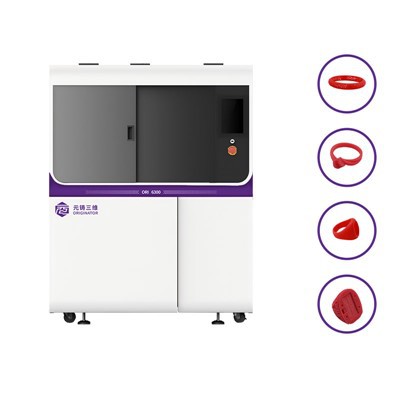
Wax 3D Printer As a jewelry 3D printer supplier, we are committed to providing our customers with the best possible solutions for their jewelry printing needs. If you have any questions or need further guidance on choosing the right layer height or any other aspect of jewelry 3D printing, please feel free to contact us. We would be delighted to engage in a procurement discussion with you and explore how our 3D printers can help you bring your jewelry designs to life.
References
- Gibson, I., Rosen, D. W., & Stucker, B. (2015). Additive Manufacturing Technologies: 3D Printing, Rapid Prototyping, and Direct Digital Manufacturing. Springer.
- Wohlers, T., & Gornet, P. (2019). Wohlers Report 2019: 3D Printing and Additive Manufacturing State of the Industry. Wohlers Associates.
- Petrovic, M., & Aitchison, R. (2019). 3D Printing for Jewellery: A Design Guide. Bloomsbury Publishing.
Hangzhou Originator 3D Technology Co., Ltd.
Hangzhou Originator 3D Technology Co., Ltd. is one of the most experienced jewelry 3d printer manufacturers and suppliers in China. With abundant experience, we warmly welcome you to wholesale high quality jewelry 3d printer made in China here from our factory. Contact us for more details.
Address: Room 403, Building 2, Block B, Heda Incubation Park,No. 452, 6th Avenue, Xiasha, Qiantang District,Hangzhou, Zhejiang, China
E-mail: Sales@originator3d.com
WebSite: https://www.originator3d.com/
