Hey folks, if you’ve ever shopped around for single stage dies or gang dies, you know the struggle isn’t just finding someone who makes ’em—it’s figuring out what those dies should even be made of, right? I’ve been in the game for, well, let’s say long enough to’ve fielded “wait, can I use that?” and “why did my last die crack after two jobs?” questions a hundred times over. As someone who runs the show at a small, die-making shop that specializes in single stage dies and gang dies, I’m not here to regurgitate textbook jargon or sell you something that’ll fall apart by next quarter. Let’s cut the crap and talk real, usable materials for single stage dies—no fluff, no fancy numbers you’ll never use. Single Stage Dies & Gang Dies
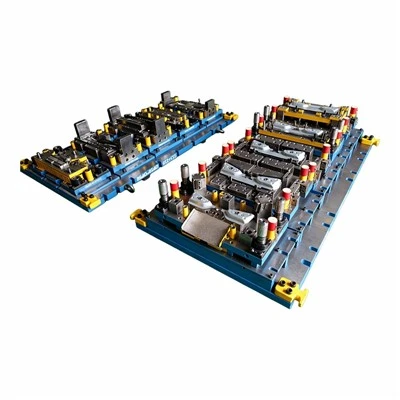
First off, let’s get one thing straight: single stage dies are way different from their gang die cousins, even if they work on the same stamping presses. A single stage die does one specific operation per hit—maybe punching a hole in a steel bracket, bending a tab, or trimming the edge of a gasket—while a gang die cranks out multiple operations at once. That single-operation focus means single stage dies need materials that hold tight to precision, don’t wear out fast, and don’t cost a fortune you can’t recoup on a small production run.
Let’s start with the most common one out there right now: D2 tool steel. I know, I know—everyone talks about D2, but for good reason. It’s the workhorse of single stage dies, full stop. Why? It’s got this sweet spot of hardness (around 60 on the Rockwell C scale, if you care, but honestly just know it’s tough) and wear resistance. I’ve got a customer who makes metal appliance brackets—they run their D2 single stage die 8 hours a day, 5 days a week, and it’s still on the original setup after two years. The only time they swap parts is when they adjust for new bracket sizes, not because the die itself wore out. The catch? It’s air-hardened, so you don’t have to quench it in oil and risk warping, which is huge for small shops that don’t have a big heat treat lab on-site. Yeah, it’s a bit pricier than, say, O1, but if you’re doing high-volume production (like 10k+ parts), it pays for itself in not having to replace it every 6 months. We use D2 for 60% of the single stage dies we make, hands down.
Next up, O1 tool steel. This is the die material for the folks who do smaller runs or prototype work—you know, the guy who’s testing a new lawnmower part and only needs 500 pieces to see if it works. O1’s a little softer than D2 (around 58-60 HRC) but way easier to machine and grind. If you’re a shop that makes custom single stage dies in a hurry, O1 is your friend. You don’t have to spend extra time heat treating it (though you can, if you want more hardness) and it’s way less likely to crack if you’re tweaking the die on the fly. I had a customer last year who was testing a medical device gasket prototype—he needed the die in 3 days, not 2 weeks. We machined it from O1, knocked it out in 2 days, and he ran his small test run, then came back a month later when his production ramped up to get a D2 version. It’s perfect for when you don’t need that super heavy-duty stuff, but still need a die that holds shape.
Wait, can we talk about something newer? A2 tool steel. A lot of people sleep on A2, but it’s the middle kid that balances D2’s toughness and O1’s machinability. It’s a little more stable than D2, so if you’re making a die that’s got weird, tight tolerances (like a die for a computer chip lead frame), A2 won’t warp on you during heat treat as much. It’s got good wear resistance too—so it works for medium-volume runs, like 5k to 15k parts. I used to only recommend A2 for gang dies, but lately I’ve been putting it in single stage dies for customers who don’t want to splurge on D2 but don’t want to replace O1 every time production picks up. It’s not the cheapest, but it’s versatile.
Now, let’s get to the wild card: tungsten carbide. Yeah, I know, it sounds like something out of a sci-fi movie, but it’s real, and it’s for when you’re pushing die limits. Tungsten carbide is way harder than any tool steel (like 90 HRC, for real) and wears like… well, like nothing I’ve ever seen. We made a single stage die for a customer who makes automotive fuel injector components—those parts have to be perfect, no burrs, no dimensional shifts, or the whole injector fails. Their production run is 100k parts a month, and the tungsten carbide die’s still running strong after a year. The catch? It’s super brittle. If you drop it, or if you run a press too hard and it hits a blank that’s not aligned, it’ll chip or crack way easier than steel. Also, it’s way more expensive—like 5x the cost of D2 for the same size die. So you don’t use it for every job, but when you need that extreme durability, it’s non-negotiable. We only use carbide for single stage dies when the customer’s production volume is through the roof and precision is make-or-break.
But wait—what about for the really small jobs? Like, if you’re a hobbyist making custom metal signs, or a small shop doing 100-part runs for local hardware? You don’t need D2 or A2 or whatever. I’ve used spring steel for prototype single stage dies before, and it works. Wait, not spring steel—low-carbon steel, like 1018. It’s soft, easy to cut on a mill or even a hand grinder, and if you’re only making a dozen parts, it’s totally fine. Yeah, it’ll dull after 100 parts, but if you’re not looking to invest in a high-end die, it’s a solid stopgap. I wouldn’t recommend it for production, but for testing or one-off jobs, it’s perfect.
Now, let’s get real about what not to use. I’ve seen guys use regular mild steel (like 1010) because it’s cheap, and that’s a disaster. It dulls after 10 parts, so you’re spending more time grinding it than running parts. I’ve also seen people use cast iron? No, cast iron is for engine blocks, not dies—it’s too brittle, chips easily, and wears like a sponge. Don’t do that. And for the love of all things stamping, don’t use stainless steel for a die—wait, no, wait—wait, tool steels are different from stainless. I mean, don’t use common 304 or 316 stainless. It’s not tough enough for the repeated impact of stamping presses. Stick to the tool steels we talked about, or carbide, and you’re golden.
Wait, another thing that’s not just the material—wait, no, the material choice depends on how you’re using the die. Single stage dies don’t just sit on a shelf; they get beat up by stamping presses, they have to hold tight tolerances, they need to resist wear from whatever you’re stamping—aluminum, steel, stainless, even plastic sometimes. If you’re stamping thick, hard steel (like 1/4” steel brackets), you need D2 or carbide. If you’re stamping thin aluminum for soda cans, O1 is probably fine. If you’re doing prototypes, A2 is a middle ground.
Let me give you an example of a bad call I made early on. When I first started this shop, I had a customer who wanted a single stage die for stamping 16-gauge stainless steel brackets. I used O1 because it was quick and cheap. That die lasted 200 parts. 200. The customer came back mad, so I swapped it out for D2, and that same die’s been running for 3 years now. That’s the kind of call you don’t want to mess up, so material choice isn’t just “pick one”—it’s matching the material to your application.
Also, let’s talk about gang dies quick, just to tie it in since that’s part of our business. A lot of people ask if the same materials work for both single stage and gang dies, and mostly yeah, but gang dies have more moving parts, so sometimes we use A2 for gang dies because it’s easier to machine the complex shapes without warping. But for single stage, since it’s simpler, we can go with the material that fits the job.
Now, if you’re someone who’s in the market for a single stage die or a gang die, here’s my two cents: don’t just ask for “a die”—tell your supplier what you’re stamping, how many parts you need, and what tolerances you need. If you say “I need 500 aluminum brackets, medium precision,” they should point you to O1. If you say “I need 100k steel fuel injector parts, ±0.001” tolerance,” they should say carbide or D2. If they just push D2 on you for a 100-part prototype, they’re just trying to upsell you, plain and simple.
At the end of the day, the best material for a single stage die isn’t the most expensive, it’s the one that matches your exact needs. I’ve had customers come to me thinking they need a $5k carbide die, when really an O1 die for $800 would do exactly what they need, for their production run of 500 parts. It’s all about matching.
If you’re ready to stop guessing what die material you need, or you want to build a single stage die that actually holds up to your production, hit us up. We build custom single stage dies and gang dies for all kinds of stamping jobs, and we’ll give you the straight talk on what material works for you—no sales pitch, no jargon, just what’ll work for your parts.
Metal Stamping Dies References
- Die Design Handbook, Society of Manufacturing Engineers
- Tool Steel Guide, American Iron and Steel Institute
- Tungsten Carbide Applications for Metal Stamping, Metal Stamping Association
Dongguan Changdong Tool & Die Co., Ltd.
With abundant experience, we are one of the most reliable single stage dies & gang dies manufacturers and suppliers in China. Please feel free to buy advanced single stage dies & gang dies made in China here from our factory. Good service and quality products are available.
Address: No. 56-B, Fumin South Road, Dalang Town, Dongguan City, Guangdong Province, China
E-mail: sales@stamping-die.com
WebSite: https://www.metalstampingdie.com/
