Hey there, if you’re reading this, you’re probably deep in the thick of drilling operations or well completion work—enough to know that when it comes to wellbore tools, one wrong pick can turn a smooth run into a nightmare. And if non-magnetic subs are on your radar, you’re already dealing with that tricky balance: you need a tool that doesn’t mess with your downhole electronics, but also works as hard as the rest of your bottomhole assembly (BHA). I’m [your company name], and we’ve supplied non-magnetic subs to drilling crews across the globe for over a decade, so I’m here to cut through the tech jargon and lay out exactly what you need to get these subs installed right. No fluff, no vague specs—just the real stuff we wish every customer asked before grabbing their wrench. Non-Magnetic Subs

First off, let’s get one thing straight: non-magnetic subs aren’t just a “one-size-fits-all” add-on. If you install them without locking in the right requirements for your well, you’ll end up with tool failures, lousy logging data, or even worse—catastrophic downhole damage. Let’s start with the basics: material specs. Not all non-magnetic metals are created equal. Some cheap options out there might claim to be non-magnetic, but they’re actually high-manganese steels that can develop magnetism under high downhole stress (we see this all the time). Our subs are made from 18-12-3 high-nitrogen austenitic stainless steel, certified to maintain a magnetic permeability of less than 1.05 at all operating temperatures. Why does that matter? Because if permeability creeps up, your MWD/LWD tools (those directional and logging gadgets that keep you on target) will throw wonky data, leading you to drill off course. That’s a costly mistake—we’ve had customers who skipped material checks and had to pull their entire BHA at $50k an hour to fix a reading error. So rule number one: never skip material verification. Test the subs’ permeability on-site with a hand-held gauss meter before you thread them in. Even if the specs say they’re non-magnetic, a quick 5-minute test can save you a ton of grief.
Next up, size and dimensional compatibility. This might seem obvious, but you’d be shocked how many crews show up to the rig with a sub that’s the right length but the wrong connection type. Non-magnetic subs have to mate perfectly with your drill collars, MWD tools, and BHA components—any misalignment here can cause premature wear, or worse, a stuck tool. Let’s break this down: first, inner diameter (ID) and outer diameter (OD). The sub’s ID has to match the ID of the adjacent tools to maintain full circulation. If you have a 5-inch drill collar with a 2-inch ID, your non-magnetic sub can’t have a 1.75-inch ID—that would restrict flow, leading to excess pressure and potential washouts. And don’t even get us started on OD: if the sub’s OD is larger than the surrounding drill collars, it’ll catch on wellbore casing or formation rocks as you drill, causing vibration that breaks MWD cables. We always tell our customers to double-check the API specs for their well: API 5DP for drill pipe connections, API 7-1 for tool joints. And if you’re using a non-standard connection (like premium connections for deepwater wells), you have to get a custom sub machined to match those. Rushing this step is a surefire way to have to re-machine the sub on-site, which costs you rig time. We had a Gulf of Mexico customer once who tried to use a stock sub with a premium connection—ended up with a leak that took 12 hours to fix, costing them over $600k. Yeah, size matters that much.
Then there’s torque and make-up load. Threading a non-magnetic sub is not like tightening a bolt on your car. You have to hit the exact make-up torque to get a solid seal and avoid thread damage—too little torque, and you get a leak that lets mud get into the threads; too much, and you can crack the sub body (our non-magnetic steel is strong, but it’s not indestructible). Here’s the thing: the make-up torque for non-magnetic subs is actually higher than standard steel subs because of their material. Austenitic stainless steel is more malleable, so you need extra torque to create that metal-to-metal seal. We provide a make-up torque chart with every sub we sell, specific to the connection size and well depth. But don’t just rely on the chart—use a torque wrench calibrated that very day, and never use a pipe wrench on the connection. Use a torque-turn tool, which tells you when you’ve reached the exact make-up angle, not just torque. Another pro tip: apply anti-seize compound to the threads and pin shoulder. This prevents galling (when threads stick and tear) and makes it easier to break out the sub later if you need to. Skip the anti-seize, and you could end up with a thread that’s seized so tight you have to use a hydraulic torque wrench, which is both time-consuming and risky.
Wait, let’s talk about well conditions, because that’s a huge variable most people overlook. Non-magnetic subs have to handle whatever your well throws at it—high pressure, high temperature, corrosive mud, even abrasive drilling fluid. If you’re drilling a high-pressure, high-temperature (HPHT) well (anything over 15,000 psi and 350°F), you need a sub rated for those conditions. Our HPHT subs are heat-treated to maintain their permeability at up to 450°F, and they’re tested to 20,000 psi internal pressure. If you use a standard sub in an HPHT well, the heat will warp the material, increasing permeability and ruining your logging data. And if you’re drilling in a sour well (high H2S), you need a sub that’s resistant to sulfide stress cracking (SSC). That’s another reason we use high-nitrogen steel—its SSC resistance is way better than standard austenitic steel. Skipping SSC ratings is a death sentence in sour wells; we had a customer in the Permian Basin once who used a cheap non-magnetic sub in a sour well, and it cracked after just 72 hours of drilling, leading to a well control incident. No thank you. Also, abrasive mud with high sand content? Make sure the sub’s ID has a hardband coating, or you’ll get erosion that weakens the wall of the sub over time. That’s a simple add-on that saves you from having to replace the sub mid-drill.
Then there’s installation procedure itself. This isn’t just “screw it in and go.” When you run the BHA into the wellbore, you have to handle the non-magnetic sub with extra care. Unlike standard steel subs, which are tough, non-magnetic subs are more prone to denting or scratching—even a small dent on the sub’s body can create a stress riser that leads to cracking under pressure. So never drag the sub across the rig floor, always lift it with a sling or a hoist that supports the entire body, not just the connections. And when you’re running in the hole (RIH), go slow—at least 3 feet per second, to avoid impact with the wellbore wall. If you bang the sub into the casing, that dent I mentioned? It could be a hidden time bomb. Also, don’t leave the sub sitting on the rig floor for days in corrosive mud. If you have to store it, keep it in a dry, temperature-controlled area, and cover the connections to keep dirt and debris out. We’ve seen subs that were fine when they left our warehouse, but got ruined by sitting in a puddle of mud on the rig for a week before installation.
Wait, one more thing: post-installation checks. You can’t just thread the sub in and fire up the rig. Before you start drilling, do a few quick checks. First, re-test permeability with your gauss meter after installation—sometimes the torque and thread make-up can temporarily increase permeability (it goes back to normal once the sub is under load, but better safe than sorry). Second, do a pressure test on the entire BHA, including the non-magnetic sub. Apply 150% of your rated well pressure and hold it for 30 minutes. If you see a pressure drop, that means you have a leak in the sub or the connection. Third, do a run-through with your MWD/LWD tools to make sure they’re getting accurate data. If the readings are off, it might not be the sub—but it’s worth checking, because a bad sub can skew all your logging. We always tell customers to run a quick diagnostic before committing to the well, because pulling a BHA is a huge hassle and costs a fortune.
Let’s be real here: non-magnetic subs are a critical part of your well, but they’re only as good as how you install them. We’ve all been in drilling scenarios where you’re under tight time pressure, and cutting corners seems tempting. But trust me—skipping a permeability test, using the wrong torque, or ignoring well condition ratings will come back to bite you, hard. At [your company], we don’t just sell subs—we provide support, too. We send our field techs to rigs if you need on-site installation training, we give you free access to our torque calculators, and we even do on-site material testing if you don’t have your own gauss meter.
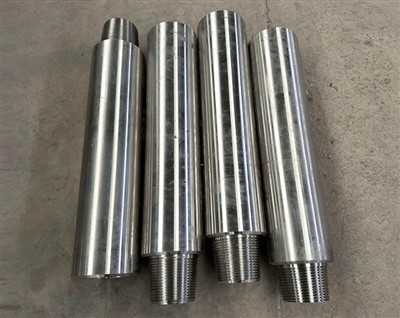
If you’re gearing up for a drilling run and need reliable non-magnetic subs that meet all these requirements, or you have questions about installation, reach out to our team. We’re here to help you avoid the mistakes that cost you rig time, lost data, and money. Let’s make your next wellbore run smooth, safe, and successful.
Non-Magnetic Tools for Coal References
- API Specification 7-1: Specification for Rotary Drilling Tools, American Petroleum Institute, 2022.
- “Non-Magnetic Materials for Downhole Tools,” Society of Petroleum Engineers (SPE) Paper 168547, 2013.
- Sour Service Requirements for Downhole Equipment, National Association of Corrosion Engineers (NACE) Standard MR0175, 2021.
- HPHT Well Construction and Operation Guidelines, International Association of Drilling Contractors (IADC), 2020.
Shanxi Zhonghe Non-Magnetic Drill Tool Co., Ltd.
Address: No.168 Fenglei Street, Houma City, Linfen City, Shanxi Province, China.
E-mail: lucy@nmdrillcollar.com
WebSite: https://www.zhnmdc.com/
