If you’ve spent any time in the industrial supply space, you know that flanges aren’t just one-size-fits-all metal discs. As a JIS flange supplier, I’ve watched this segment evolve over the last five years—from standard order requests to specific, solution-focused inquiries that tell me the industry is shifting in real, tangible ways. Today, I want to break down the trends I’m seeing firsthand, the gaps I’m working to fill, and what this means for anyone buying or working with JIS flanges right now. Jis Flange
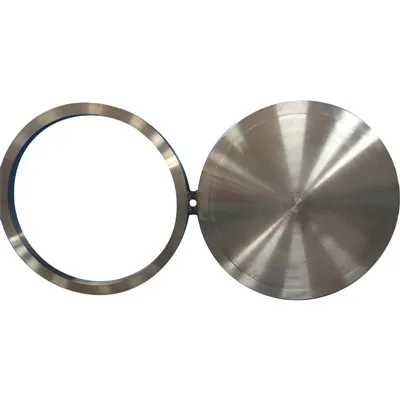
Let’s start with what JIS flanges actually are, for anyone newer to this: JIS stands for the Japanese Industrial Standards, a set of specifications that govern everything from material composition to pressure ratings for flanges used in piping, tank connections, and heavy machinery across Asia, but increasingly around the world. For my team, that means every flange we ship has to meet strict JIS B2220 standards, the core guideline for most general-purpose JIS flanges, but lately, customers aren’t just asking for compliance—they’re asking for flanges that work smarter, longer, and with less hassle, even when operating in extreme conditions.
The first big trend I’ve noticed is a massive jump in demand for corrosion-resistant JIS flanges, specifically for use in marine and offshore applications. Three years ago, around 15% of my monthly orders were for flanges used in ships, port facilities, or offshore oil and gas rigs. Last quarter, that number jumped to 42%. The reason isn’t hard to see: after a series of high-profile piping failures in 2021, most offshore and marine operators are updating their maintenance protocols to prioritize parts that don’t rust or degrade in saltwater and humidity. My team has had to adapt fast—we used to only stock carbon steel JIS flanges, but now we keep three grades of stainless steel (304, 316, and 316L) on hand, plus galvanized carbon steel for lighter marine use, all of which test for salt spray resistance per ISO 9227, the international standard for corrosion testing. What’s interesting here is that this trend isn’t just limited to heavy industry: even food and beverage manufacturers that operate near coastlines are switching to stainless steel JIS flanges, because they don’t harbor bacteria like carbon steel can when exposed to condensation.
Next, the push for custom, application-specific JIS flanges instead of off-the-shelf stock is accelerating. Five years ago, 80% of my orders were for standard 10K or 16K JIS flanges, the most common pressure ratings for general piping. Now, almost half of my orders require custom modifications: not just different sizes, but machined face finishes tailored to specific gaskets, threaded holes aligned for non-standard piping layouts, or even flanges coated with specialized materials for high-temperature use in furnaces or chemical plants. For example, last month we shipped a batch of 50 JIS 20K flanges to a steel manufacturing plant that needed flanges that could withstand continuous temperatures of 450°C—way higher than the standard JIS B2220 maximum of 300°C for carbon steel. The plant’s engineers worked with my team for two weeks to adjust the material composition to a chrome-molybdenum alloy, and even adjusted the flange’s hub thickness to handle the extra pressure at high heat. This shift away from stock is a big deal because it means customers are tired of wasting time and money modifying flanges on their end. As a supplier, that’s pushed us to keep a small, dedicated custom machining team on staff, instead of relying solely on pre-made stock, which has cut order lead times for custom work from three weeks to one.
A third trend that’s been a game-changer is the rise of supply chain transparency, driven mostly by post-pandemic delays and the push for sustainable manufacturing. For years, customers would order JIS flanges based on price alone, and worry about sourcing only after they had a failure or a backlog. Now, almost every customer asks where the raw material for the flanges comes from, how they’re manufactured, and whether the factory meets environmental standards. Last year, I had a major construction firm cancel a $50,000 order because they found out our previous supplier sourced steel from a mill with no emissions controls. Now, all of my flanges are manufactured in facilities that meet ISO 14001, the environmental management standard, and every shipment comes with a full traceability certificate: the batch number of the raw steel, the date of manufacturing, and a copy of the pressure test results. This demand for transparency isn’t just about ethics, either—it’s about reducing risk. Customers know that a flange failure because of subpar material sourcing can shut down an entire project, costing them far more than paying a slightly higher price for a reliable, traceable part.
I also can’t ignore the impact of digitalization on how JIS flanges are sold and specified. Two years ago, almost all customer inquiries came via email or phone. Now, 60% of my inquiries start on B2B industrial platforms, where customers upload a CAD drawing of their piping system and ask for a quote for matching JIS flanges. We’ve also started using a 3D configurator on our website (updated last year) that lets customers input their required pressure rating, size, and material, and see a 3D model of the flange before they even request a quote. This has cut down on miscommunications a lot—for example, a customer used to specify a “10K 100A” flange, which could mean two different things depending on the manufacturer, but now they can input their exact needs into the configurator, and we can ship a part that fits perfectly on the first try. Another big digital trend is predictive ordering: some of our regular clients use inventory management software that automatically reorders JIS flanges when stock levels drop below a set threshold. This works well for us because it lets us plan our production runs in advance, instead of scrambling for last-minute orders that can delay shipments.
Of course, no trend is without its challenges, and the biggest one for my team right now is balancing demand for specialized parts with lead times. When a customer needs a custom JIS flange that can withstand high pressure and high heat, we don’t have that sitting on the shelf—it takes three to four weeks to manufacture, test, and ship. To address this, we’ve started building a library of popular custom JIS flanges for common applications: like flanges for chemical processing plants, marine piping, and food and beverage equipment, all pre-machined and tested so we can ship them in five days or less. We also work with a network of trusted local machining partners for really rush orders, so we can meet a customer’s timeline without sacrificing quality.
Another challenge is the growing number of suppliers selling counterfeit JIS flanges, especially online. I’ve had customers show me flanges they bought from a third-party marketplace that say “JIS B2220 compliant” but don’t have the correct material markings, and fail pressure tests within a week. For my team, that means we’ve doubled down on quality control: every single flange we ship gets a visual inspection, a hardness test, and a pressure test to ensure it meets JIS standards. We also mark every flange with a unique serial number that customers can verify through our website, so they know they’re getting a genuine part that won’t fail unexpectedly.
Looking ahead, I expect these trends to continue, maybe even accelerate over the next two to three years. Demand for corrosion-resistant JIS flanges will keep rising as more industries expand into coastal and offshore areas, and I think we’ll see even more demand for custom parts that are tailored to specific, harsh operating conditions. Transparency and sustainability will only get more important, as more large companies require their suppliers to meet strict ESG (environmental, social, governance) standards. And digitalization will become even more integrated into the buying process—we’re already working on adding AI-powered quote generation that can respond to common inquiries in minutes, while still having a human team on hand for complex custom orders.

For anyone reading this who needs JIS flanges, whether you’re a small fabrication shop or a large industrial plant, the takeaway is that not all JIS flanges are the same. The old days of ordering a cheap, stock flange and hoping it works are over. Now, you need a supplier that understands the trends, has the capacity to provide custom parts, can prove their quality, and has transparent supply chains. If you’re tired of dealing with suppliers that deliver late, send the wrong parts, or cut corners on quality, I’d love to talk through your needs. We work with clients across Asia, Europe, and North America, and we can handle everything from small replacement orders to large project shipments. Don’t hesitate to reach out to discuss your requirements—we’re here to help you find the right JIS flange for your application.
Gaskets References
ISO 14001: Environmental management systems — Requirements with guidance for use
ISO 9227: Corrosion tests in artificial atmospheres — Salt spray tests
JIS B2220: 2018 Steel flanges for piping
Shanxi Xinshunda Flange Manufacturing Co., Ltd.
As one of the most professional jis flange manufacturers and suppliers in China, we also support customized service with competitive price. We warmly welcome you to wholesale high quality jis flange for sale here from our factory. For quotation, contact us now.
Address: Zhunagli Industrial Zone,jinchang Town,dingxiang,shanxi,china
E-mail: sales01@xinflange.com
WebSite: https://www.xinflange.com/
